Most furniture manufacturers understand that sourcing is important. Very few understand how much fragmented sourcing is actively costing them — not just in rupees, but in time, quality, and the ability to grow.
Fragmented sourcing is when a factory procures its materials from multiple unvetted, uncoordinated vendors with no formalised agreements, no consistent specifications, and no reliable delivery commitments. It is a pattern that starts as a pragmatic shortcut — you call whoever has stock — and becomes a structural liability that limits the entire business.
What This Article Covers
- What fragmented sourcing actually looks like day-to-day
- The five hidden costs beyond the invoice price
- Warning signs your sourcing is fragmented
- The framework for building a structured supply chain
What Fragmented Sourcing Looks Like in Practice
On the surface, a factory with fragmented sourcing looks like it is functioning. Materials arrive. Production runs. Orders go out. But look closer and the cracks appear.
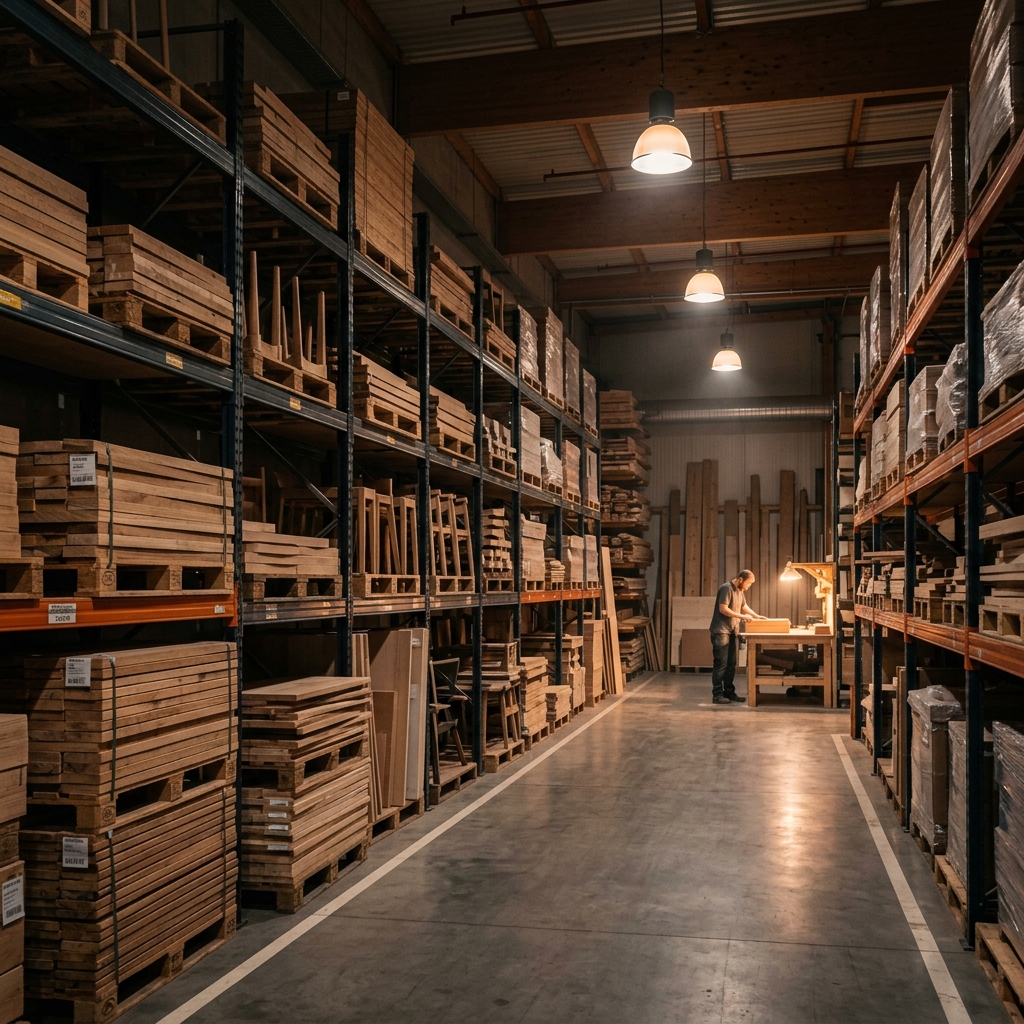
The production manager spends two hours every morning making phone calls to chase materials. The store shows three different grades of the same board — bought from three different vendors at three different times — because whoever was available that week supplied it. A batch of upholstery fabric arrives slightly off-colour because the vendor substituted a dye lot without notice. Two orders are delayed because a key hardware supplier did not deliver on time, and there was no backup.
Each of these incidents is manageable in isolation. Collectively, they represent a sourcing model that drains time, creates quality risk, and makes scaling impossible.
The Five Hidden Costs
1. Quality Inconsistency
When materials come from different suppliers with no agreed specifications, variation enters the production line. Board density varies. Hardware dimensions differ by fractions that accumulate into real problems at assembly. Fabric textures change between batches. The finished product is inconsistent — and in furniture, inconsistency is visible to anyone sitting in or walking past the piece.
2. Production Downtime
Fragmented sourcing means no buffer stock planning, no committed delivery schedules, and no accountability when a vendor fails to deliver. The result is production stoppages — lines that go idle while materials are sourced at the last minute. In a labour-intensive operation, idle time is expensive time.
3. Inflated Procurement Costs
Reactive, ad-hoc purchasing eliminates your negotiating power. When you buy small quantities from multiple vendors without volume commitments, you pay retail or near-retail prices on everything. Structured sourcing — with consolidated volumes and formal agreements — consistently delivers 10–20% cost reductions across the material base.
4. Management Bandwidth Drain
In a fragmented sourcing model, procurement is a daily fire-fighting exercise. Someone — usually a senior person who should be focused on production management — spends a significant portion of their time managing material shortfalls. This opportunity cost is rarely measured but is consistently significant.
5. Inability to Scale Orders
When a large order comes in — whether from an institutional buyer, a hotel group, or a large retail chain — the limiting factor is almost always the supply chain. A fragmented vendor base cannot reliably deliver the volume, consistency, and speed that large orders require. Growth opportunities are lost not because the factory lacks production capacity, but because it lacks supply chain capacity.
Your supply chain is the upstream half of your production system. If it is not structured, no amount of shop floor improvement will get you to consistent, scalable output.
Warning Signs Your Sourcing Is Fragmented
Before building a solution, it helps to diagnose the extent of the problem. Here are five reliable indicators:
- You have more than three unvetted vendors for any single material category — and no formal agreements with any of them.
- Your store holds multiple grades of the same material from different sources with no clear specification standard.
- Procurement decisions are made reactively — based on who is available, not who is the best fit.
- You have experienced at least two production stoppages in the past quarter due to material non-availability.
- You cannot predict material costs for a project at quotation stage without making multiple phone calls first.
If three or more of these apply to your operation, your sourcing model is actively limiting your business.
Building a Structured Supply Chain
The path from fragmented to structured sourcing is not a single step — it is a deliberate process that unfolds over months. But the framework is clear.
Step one is supplier identification and categorisation. Map every material you buy against a shortlist of potential suppliers who meet minimum criteria for quality consistency, delivery reliability, and financial stability. This is not about finding the cheapest vendor — it is about finding the right vendor for each material category.
Step two is vendor evaluation and onboarding. Run trial orders with shortlisted vendors. Evaluate them against defined criteria — specification adherence, delivery accuracy, packaging quality, communication responsiveness. Document the results. Select primary and secondary vendors for each category.
Step three is formalising agreements. Even without a legal contract, a documented agreement covering pricing, payment terms, delivery lead times, quality specifications, and return procedures changes the nature of the relationship. Vendors who operate within documented frameworks deliver better service than those operating on informal arrangements.
Step four is integrating the supply chain into production planning. Procurement should not be reactive. Material requirements should flow from the production plan — what is being built, in what quantities, by when — and procurement should be triggered ahead of need, not in response to shortage.
This is the difference between a supply chain and a sourcing habit. The former is a managed system. The latter is an accumulated improvisation.