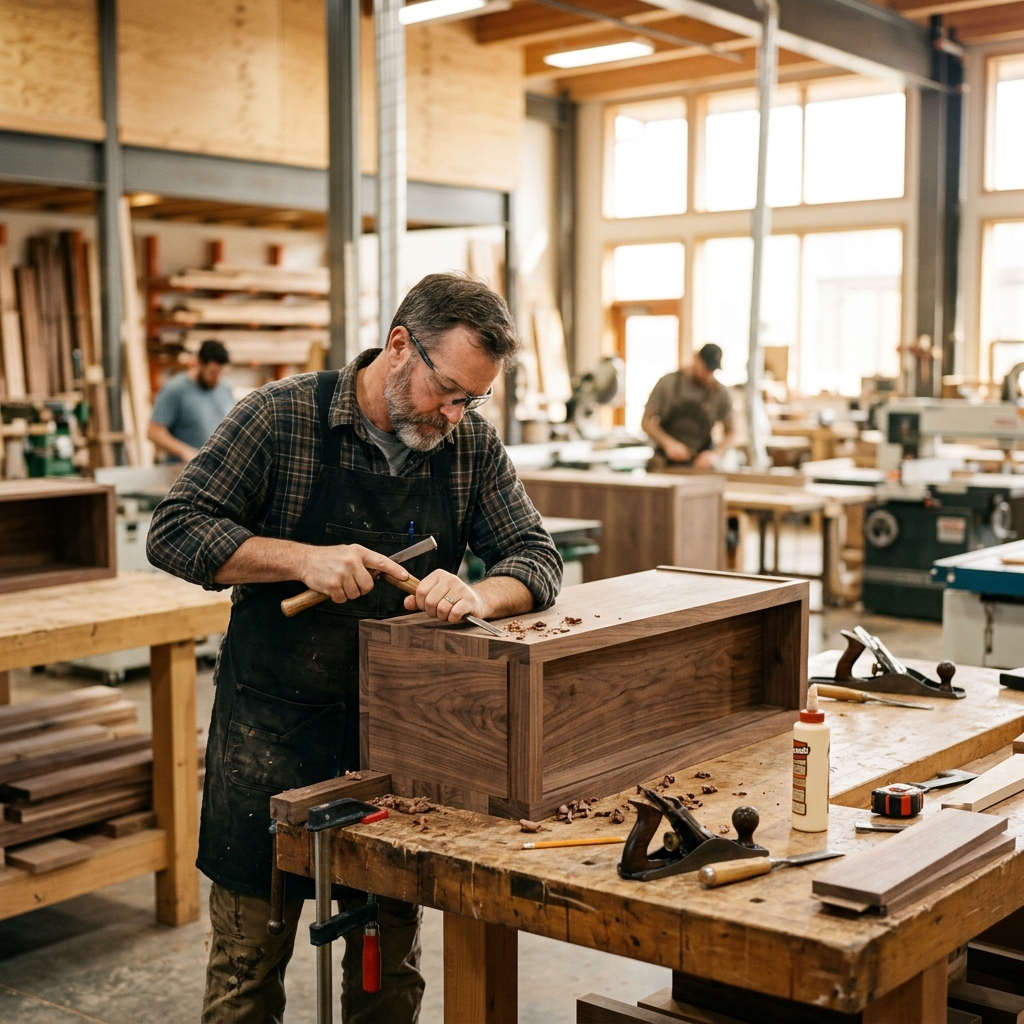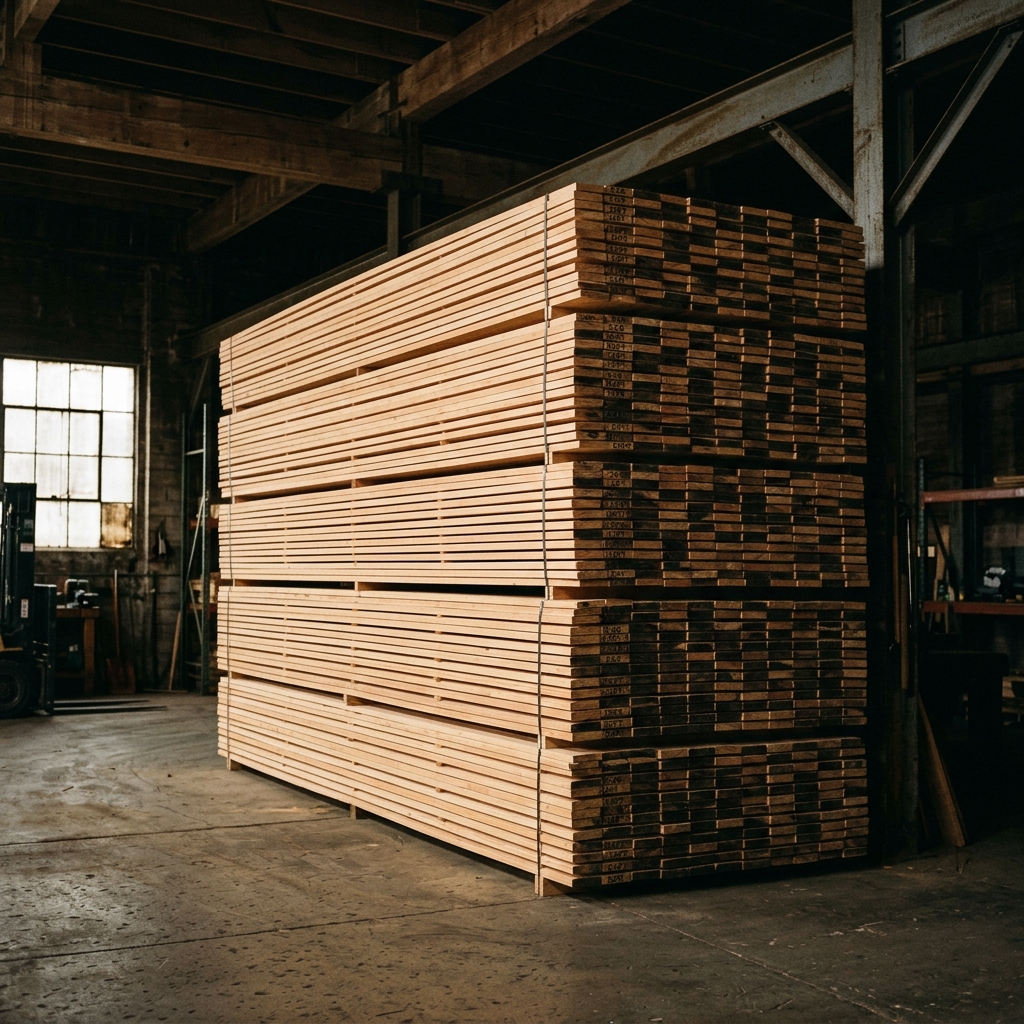
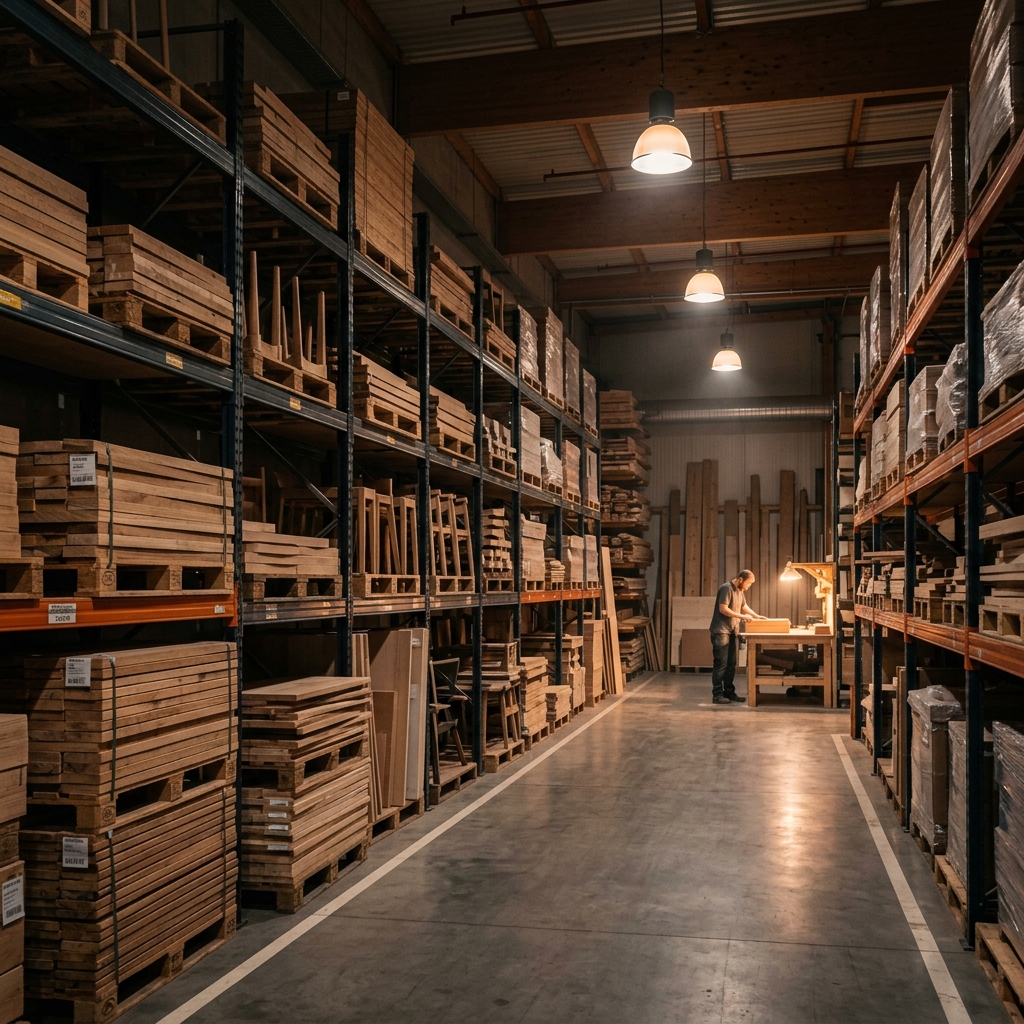
Setting up a furniture factory in India is not simply a matter of renting a shed, buying some machines, and hiring carpenters. Done well, it is a structured process that determines the efficiency, quality, and scalability of everything that follows. Done poorly, it creates constraints that are expensive and disruptive to undo later.
This guide covers the complete process — from feasibility and location through to your first successful production run. It is written for entrepreneurs launching a new facility and for established manufacturers looking to set up an additional unit or restructure an existing one.
Eight Stages Covered in This Guide
- Stage 1: Define your product scope and production target
- Stage 2: Location selection
- Stage 3: Factory layout and floor design
- Stage 4: Machinery selection and installation
- Stage 5: Vendor and raw material sourcing
- Stage 6: Workforce setup and training
- Stage 7: Systems and process documentation
- Stage 8: Trial production and commissioning
Stage 1: Define Your Product Scope and Production Target
Every decision in a factory setup — from location to machinery to workforce — flows from a clear answer to two questions: what are you making, and how much of it?
Your product scope defines your process requirements. A factory producing solid wood bedroom furniture has fundamentally different machining, finishing, and storage requirements than one producing upholstered seating or modular office furniture. If your scope is broad — multiple product categories — your factory design needs to accommodate that range without creating bottlenecks at shared resources.
Your production target defines your capacity requirements. How many units per day, per week, per month? What is the target utilisation of your production floor? These numbers drive your machinery selection, floor space requirements, and workforce sizing. Starting with a clear, conservative capacity target and designing the factory for scalability — rather than trying to build maximum capacity from day one — is almost always the right approach.
Stage 2: Location Selection
Location is a strategic decision with long-term implications. The factors that matter most for a furniture factory are:
Proximity to raw material sources. Timber, board, upholstery materials, and hardware have meaningful logistics costs. Locating near major material clusters — timber yards, MDF manufacturers, hardware distributors — reduces both cost and lead time. Industrial clusters in Rajasthan, UP, Karnataka, and Maharashtra each have specific material ecosystems worth mapping before selecting a site.
Labour availability and cost. Furniture manufacturing is labour-intensive. Regions with established furniture manufacturing traditions — Jodhpur, Saharanpur, Ernakulam, parts of the NCR — have deeper pools of trained or trainable workers than regions without that heritage. This affects both recruitment cost and training time.
Infrastructure quality. Three-phase power supply with stable voltage is essential for industrial machinery. Road connectivity for raw material intake and finished goods despatch matters significantly. Water supply for finishing and cleaning operations is often overlooked but important.
Regulatory environment. Industrial zones with clear land-use permissions, access to government schemes for manufacturing units, and straightforward compliance pathways are preferable to greenfield locations that require significant regulatory navigation before construction can begin.
Stage 3: Factory Layout and Floor Design
The layout of your production floor is arguably the most consequential decision in the entire factory setup process. A well-designed layout creates a logical, efficient production flow where material moves through the factory with minimal backtracking and handling. A poorly designed layout creates congestion, excess material movement, and bottlenecks that are almost impossible to eliminate without a major reconstruction.
Think of your factory floor as a river. Raw material enters at one bank; finished goods leave at the other. Your job is to design a channel that moves production downstream with minimum turbulence.
The principles of good furniture factory layout include:
- Linear or U-shaped flow — material enters at one end (raw material store), moves through processing (cutting, machining, sub-assembly, main assembly, finishing), and exits at the other (despatch).
- Workstation adjacency — stations that pass work to each other should be physically adjacent. Long material travel distances between stations waste time and create handling damage risk.
- Clear aisle widths — wide enough for forklift or trolley movement, unobstructed, and not used as informal storage.
- Designated zones for WIP storage — in-process inventory accumulates between stations. Without designated zones, it spills into aisles and creates safety and efficiency problems.
- Finishing area isolation — spray finishing requires ventilation, fire safety compliance, and separation from dust-generating operations. Design this as a separate, enclosed zone from the outset.
Stage 4: Machinery Selection and Installation
Machinery investment is typically the largest single capital expenditure in a furniture factory setup. The decisions made here are difficult and expensive to reverse, which makes getting them right the first time critical.
The core machinery requirements for a mid-scale furniture factory typically include a panel saw or beam saw for primary cutting, a CNC machining centre for profiling and routing, edge banding, drilling and dowelling, and spray or roll finishing equipment. Beyond this core, the specific product mix drives additional requirements — band saws and shapers for solid wood work, foam cutting equipment for upholstered products, and so on.
Key decisions in machinery selection include:
New vs. refurbished. Quality refurbished European machinery often delivers significantly better precision and reliability than new Chinese machinery at comparable price points. The trade-off is parts availability and support. For production-critical equipment, new machinery with a local service network is often worth the premium.
Manual vs. automated. Automation makes sense where precision requirements are high, volumes are consistent, and labour is the constraint. In early-stage factories, over-automation can create inflexibility. A hybrid approach — automated for high-volume, precision-critical operations; skilled manual labour for complex assembly and finishing — is typically optimal.
Scalability. Select machinery that can handle your target capacity at moderate utilisation, not machinery that is already at its limit at target volume. Headroom for capacity growth should be factored into equipment selection.
Stage 5: Vendor and Raw Material Sourcing
Before your factory produces its first piece, you need a structured vendor ecosystem in place. This means identifying and onboarding primary and secondary suppliers for every material category you will use — board, timber, edging, hardware, upholstery materials, finishing chemicals, and consumables.
Do not wait until production pressure exists to figure out your supply chain. The worst time to evaluate vendors is when you desperately need materials. Build your vendor relationships during the setup period, run trial material orders, evaluate quality and delivery consistency, and establish your sourcing framework before production begins.
Stage 6: Workforce Setup and Training
A furniture factory at commissioning stage typically needs a tiered workforce: skilled operators for CNC and precision machinery, semi-skilled workers for assembly and finishing preparation, and general labour for material handling and packing. The mix depends on your product and production model.
Recruitment should begin well before the factory is ready to run — skilled workers are not always immediately available, and hiring with notice allows you to run structured training during the final installation and commissioning period. Training against your SOPs — rather than against informal on-the-job instruction — means your workforce enters production with a consistent quality baseline.
Stage 7: Systems and Process Documentation
Before the factory runs, the processes it will run on should be documented. This is not bureaucracy — it is the foundation of consistent quality and scalable operations. SOPs for every core production operation, quality control checkpoints, inventory management procedures, and maintenance schedules should all be documented, reviewed, and ready for implementation at commissioning.
Factories that document processes before production begins spend significantly less time firefighting quality problems after production starts. The investment in documentation at setup stage pays back in reduced rework, faster workforce training, and more consistent output.
Stage 8: Trial Production and Commissioning
Trial production is the critical bridge between a factory that has been set up and one that is actually ready to run. Run a structured trial production period — typically two to four weeks — where you produce real products under real conditions, but with close supervision and explicit permission to stop, investigate, and fix problems as they arise.
Trial production will reveal layout inefficiencies you did not anticipate. It will identify machinery settings that need adjustment. It will expose training gaps in your workforce. It will test your vendor supply chain against actual production demand. Every problem that surfaces during trial production and is fixed before full production begins is a problem that will not become a customer complaint after production starts.
Commission the factory formally only when trial production has run consistently at or above target quality standards for a sustained period. The temptation to declare the factory "open" and begin taking orders prematurely is understandable but expensive.
The Setup Phase Is the Foundation
The decisions made during factory setup have a compounding effect on everything that follows. A well-designed factory layout reduces material handling cost every day for the life of the factory. A well-selected vendor ecosystem means reliable material supply for years. A well-documented process framework means every new worker who joins can be trained to a consistent standard.
Invest the time, expertise, and resources in getting the setup right. The return on that investment is not measured in months — it is measured in the operational efficiency, quality consistency, and growth capacity of the business for years to come.