The most common objection to systematising furniture production is this: "Our quality comes from our craftsmen's skill and experience. You cannot put that in a process document." This objection is understandable — and largely wrong.
Craftsmanship is not magic. It is accumulated knowledge about what works — which joint tolerances matter, which sanding sequence produces the best finish, which coating thickness gives the right sheen without cracking. All of that knowledge can be documented, taught, and built into a process that does not depend on any single person to remember it.
The factories that have successfully scaled from artisanal to industrial production — in furniture, in ceramics, in textiles — have done so not by abandoning craft knowledge but by encoding it into systems. The craft becomes the standard. The system enforces the standard. Quality stops being personal and becomes institutional.
Key Concepts in This Article
- The false tension between craft and systems
- How to extract tacit knowledge from your best craftsmen
- Building SOPs that actually preserve quality standards
- In-process quality control vs. end-of-line inspection
- Training systems that replicate quality at scale
The False Tension Between Craft and Scale
The fear is understandable. Many factory owners have watched peers scale up, reduce costs, and end up producing furniture that feels cheap, looks inconsistent, and damages the brand reputation it took years to build. They conclude that scale is the enemy of quality.
But the root cause of that quality degradation is almost never scale itself. It is the absence of systems to carry quality through scale. When a factory grows its volume without growing its quality framework, quality degrades. When a factory grows its quality framework alongside its volume, quality is preserved — or even improved, because more rigorous processes catch errors that individual inspection misses.
The question is not "can we scale without losing quality?" The question is "what quality framework do we need to build before we scale?"
Extracting Tacit Knowledge from Your Best People
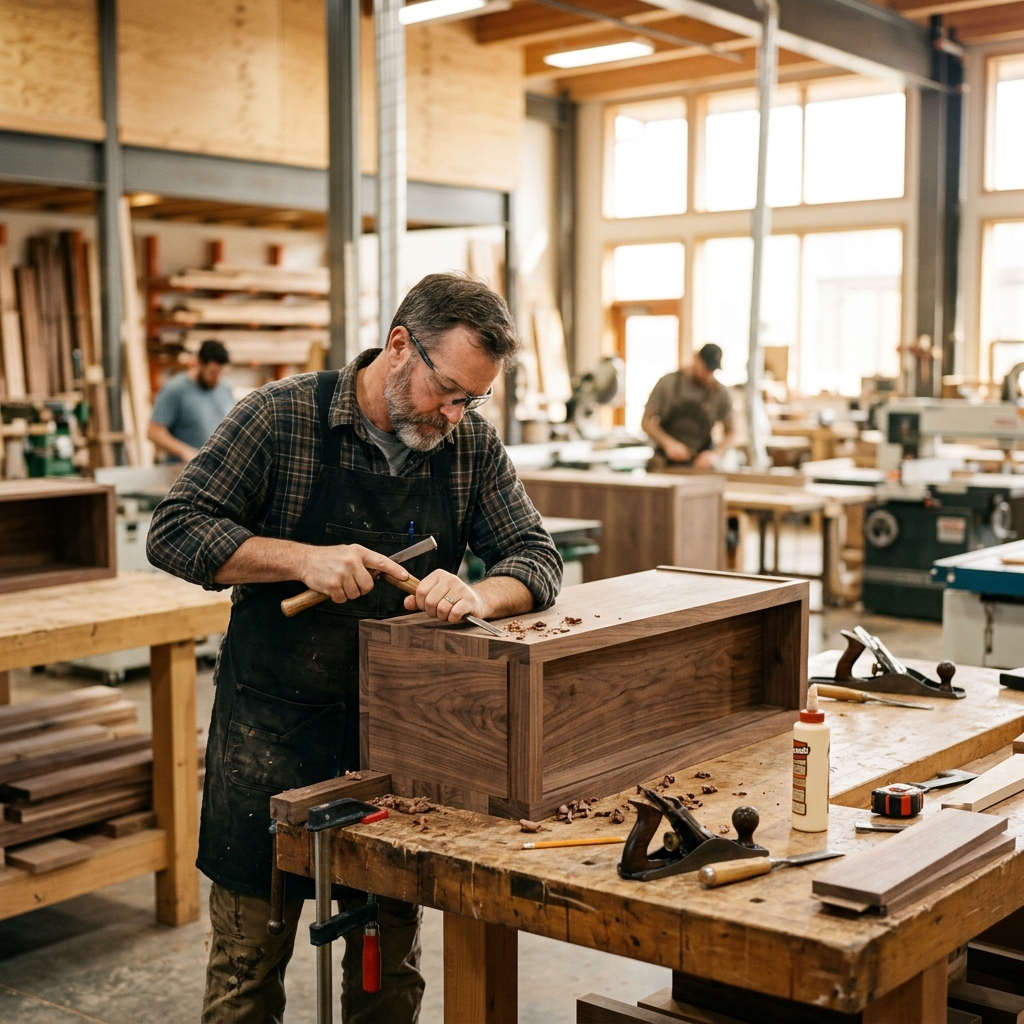
Before you can systemise craftsmanship, you need to make it visible. Most craft knowledge in furniture factories is tacit — it exists in the hands and habits of experienced workers who cannot always articulate what they know. Your goal is to externalise that knowledge.
The most effective method is structured observation. Sit with your best carpenter during a key operation. Ask them to narrate what they are doing and why. Ask what they look for to know that something is right. Ask what went wrong in the past and how they caught it. Repeat this across multiple experienced workers and across multiple operations.
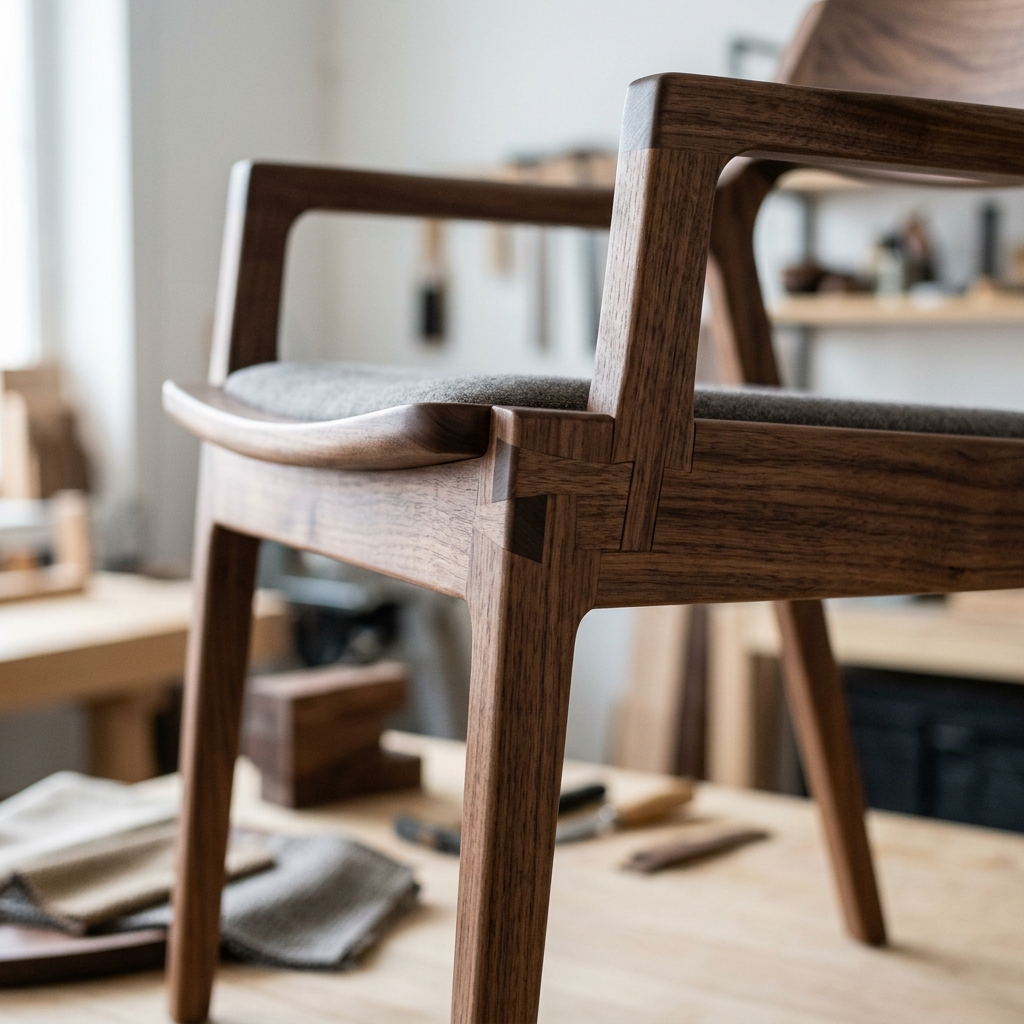
What you will find is that tacit knowledge is rarely mysterious. It is usually a set of observable checkpoints — this joint should have no visible gap, this surface should feel uniformly smooth under the palm, this coating should dry to a specific sheen within a specific time range. These checkpoints can be written down, illustrated, and turned into inspection criteria.
Building SOPs That Preserve Quality
A standard operating procedure is only as good as its specificity. Vague SOPs — "sand the surface until smooth" — do not transfer quality. Specific SOPs do.
A well-written SOP for a sanding operation might specify: the grit sequence (80, 120, 180, 220), the direction of sanding relative to grain, the pressure applied, the visual and tactile test to confirm readiness for the next step, and the common errors to watch for (cross-grain scratches, edge rounding, heat buildup from excessive speed). That level of specificity can be trained against. It can be audited. It produces consistent output regardless of which worker performs the operation.
The goal of a good SOP is not to replace skill — it is to make skill transferable. The best craftsman's knowledge, encoded in a document, becomes the organisation's permanent asset.
Effective SOPs also include visual references — photographs or diagrams showing what acceptable and unacceptable output looks like. This is particularly important in furniture manufacturing, where quality is often a visual and tactile judgment that words alone cannot fully describe.
In-Process Quality Control vs. End-of-Line Inspection
Most furniture factories inspect quality at the end of the line — after the piece is assembled and finished. This is the most expensive place to find defects. By the time a quality issue is visible on a finished piece, the defect has typically been through multiple value-adding steps. Rework at this stage is costly and sometimes impossible.
Systematised quality control moves inspection upstream. Each major operation — cutting, machining, sub-assembly, main assembly, finishing — has defined quality checkpoints. Workers check their own output before passing it to the next stage. A supervisor audits a sample at each checkpoint. Problems are caught when they are small and cheap to fix, not after they have been compounded by subsequent processing.
This is not a new idea — it is the foundation of lean manufacturing and Toyota's production system. But it is rarely implemented in furniture manufacturing, where the dominant quality model is still end-of-line inspection and rework. Shifting to in-process control is one of the highest-leverage changes a furniture factory can make.
Training Systems That Replicate Quality
The final component of systemised craftsmanship is a training programme that replicates quality standards reliably across new hires. Without a structured training system, quality knowledge remains concentrated in your most experienced workers. Every new hire becomes a quality risk until they absorb enough informal knowledge to perform reliably — a process that typically takes months or years with no structured guidance.
A structured training programme changes this. It defines the progression of skills a new worker needs to develop, in what sequence, with what demonstrations and practice requirements. It links training directly to the SOPs, so new workers learn to the documented standard rather than approximating it from observation. And it includes competency assessment — clear criteria for when a worker is ready to work independently on each operation.
The result is a factory that can grow its workforce without growing its quality risk. Skilled, reliable workers can be developed in weeks rather than months. Quality standards are embedded from day one rather than absorbed over time.
Quality as Infrastructure, Not Inspection
The shift that systemised craftsmanship enables is profound. Quality moves from being a property of individuals to being a property of the system. It stops being something you inspect for and becomes something you engineer into every step of production.
This is how the world's best manufacturers operate — not by hiring the best individual workers, but by building the best systems for those workers to operate within. Furniture is no different. The craft does not disappear; it gets embedded into the infrastructure of the factory, where it is reliable, transferable, and scalable.