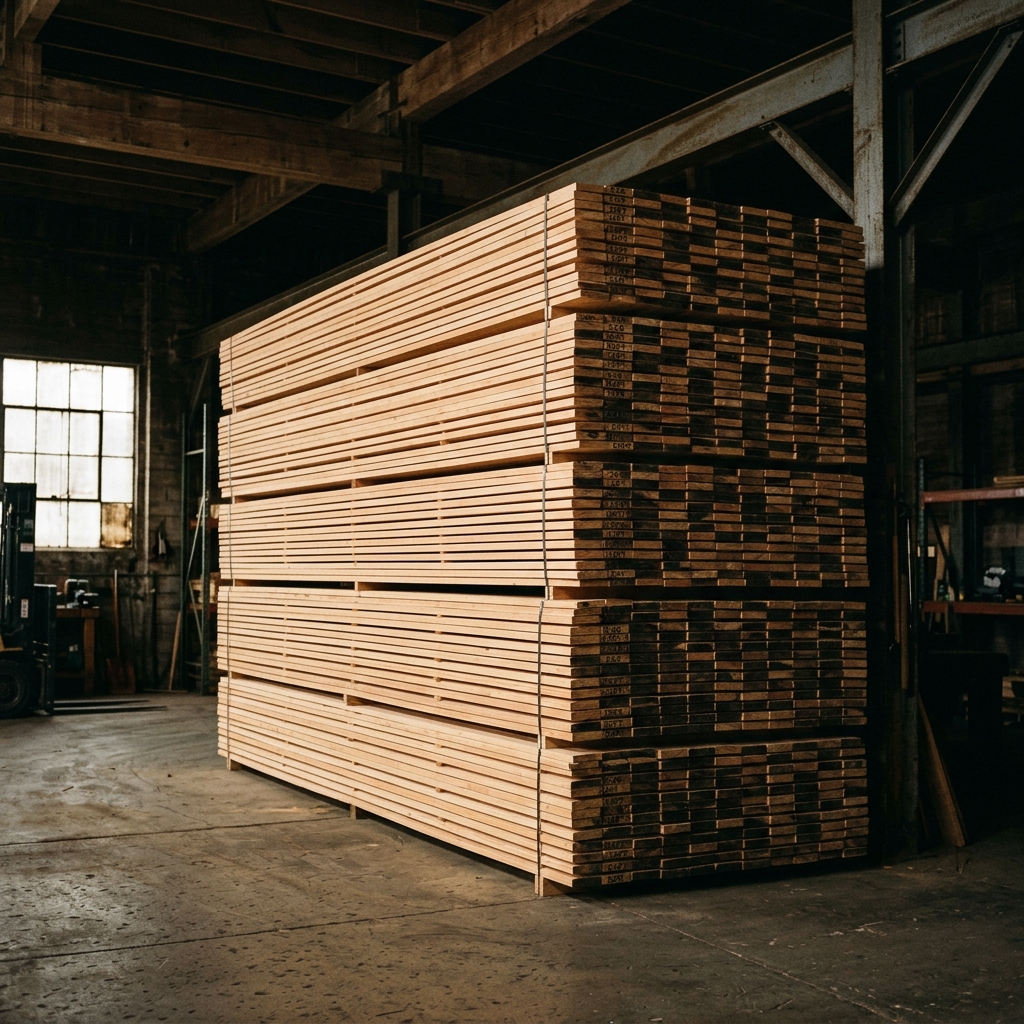
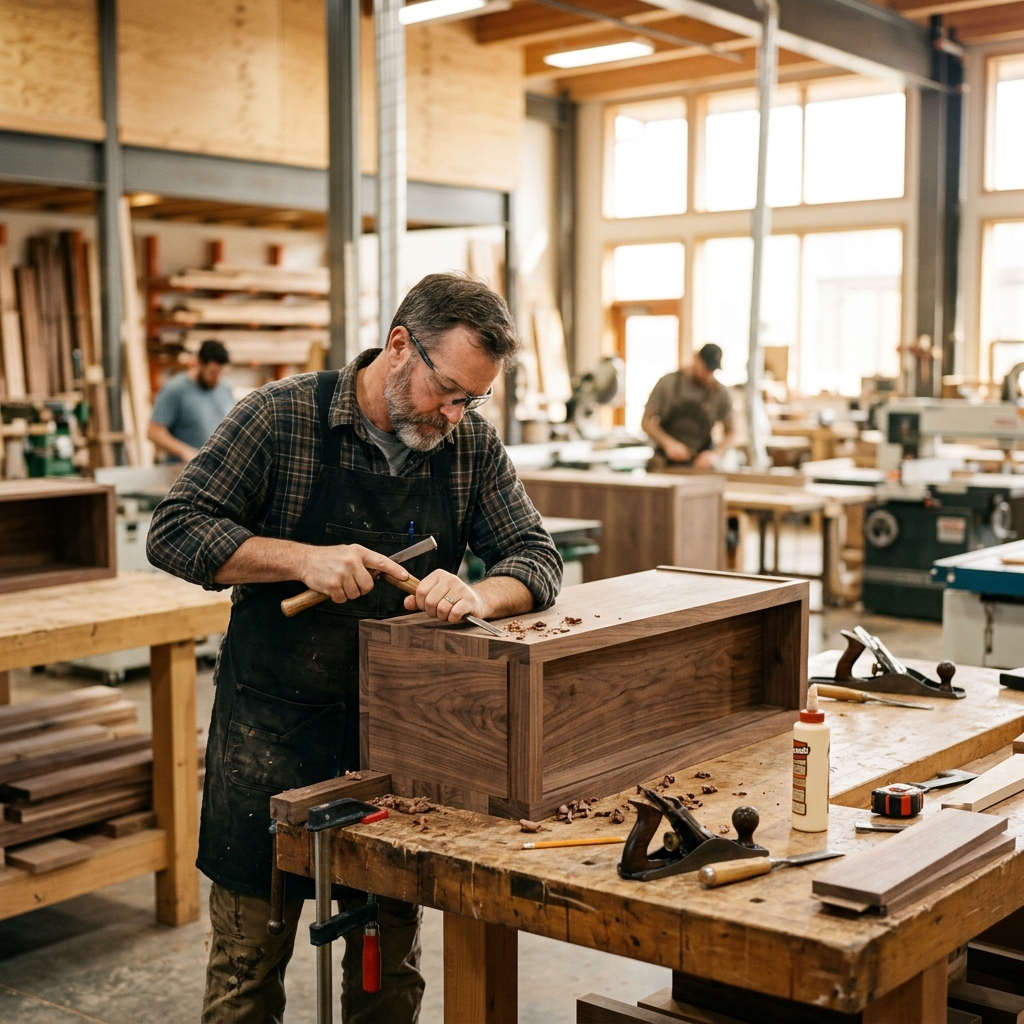
Every furniture factory owner has a moment where they realise growth has stalled — orders are piling up, quality is slipping, and adding more people does not seem to help. The instinct is to blame capacity. The real problem is almost always the absence of systems.
Across India's furniture manufacturing landscape, we see the same pattern repeatedly. A factory starts with one driven founder, a handful of skilled craftsmen, and a handful of loyal customers. Output is good because the founder is involved in everything. Then growth comes — and the factory begins to break.
Why? Because the factory was built around people, not processes. And people, unlike processes, do not scale.
Five Root Causes Covered in This Article
- No standard operating procedures
- Key-person dependency across every function
- Fragmented and unstructured vendor ecosystem
- Absent capacity planning
- Reactive machinery decisions
1. No Standard Operating Procedures
In most small and mid-sized furniture factories, knowledge lives in people's heads. The senior carpenter knows the sanding sequence. The finishing supervisor knows the coating ratios. The store manager knows which vendor to call when stock runs out. None of it is written down, standardised, or transferable.
This creates a factory that is entirely dependent on its most experienced people showing up every single day. When someone leaves, gets sick, or simply has a bad day — production suffers. When you want to hire and train new workers, there is no framework to train them against. Quality becomes inconsistent because each person applies their own interpretation of "good."
A factory without SOPs is not a system — it is a collection of individual habits held together by institutional memory.
The fix is not complicated, but it requires discipline. Every core operation — cutting, assembly, finishing, quality checking, packing — needs a documented step-by-step process. These SOPs become the backbone of training, quality control, and eventually, scalable hiring.
2. Key-Person Dependency
Closely related to the absence of SOPs is the phenomenon of key-person dependency. In most furniture factories, there are two or three individuals whose presence determines the quality and output of the entire floor. Remove them, and the factory slows to a fraction of its capacity.
This is an existential risk. It means your factory cannot run a second shift reliably. It means your growth is capped by how much your best people can personally oversee. It means that when a key person gets a better offer elsewhere, you are left exposed.
The path out of this trap is systematisation. When processes are documented and training is structured, skills transfer from individuals to the organisation. Knowledge stops being personal property and becomes institutional infrastructure. The factory can then scale its human resources in line with demand rather than being constrained by its best performers.
3. A Fragmented Vendor Ecosystem
Most furniture factories source materials reactively — calling whichever supplier answers the phone when stock runs low. Over time, this creates a fragmented ecosystem of vendors with no formalised relationships, no agreed quality standards, and no commitment to reliable delivery timelines.
The consequences compound as you grow. A 10-piece order can be managed with informal sourcing. A 500-piece order cannot. Material inconsistencies become visible at scale. Delivery delays from one vendor stall an entire production batch. Price fluctuations eat into margins that were already thin.
Scaling requires a structured vendor strategy — a curated network of pre-evaluated suppliers with agreed specifications, pricing frameworks, and delivery commitments. This is not about having more vendors. It is about having the right vendors, integrated properly into your production plan.
4. No Capacity Planning
Ask most furniture factory owners what their monthly output capacity is, and you will get an estimate. Ask them how that capacity breaks down by product type, machine hours, and labour, and most will not have a precise answer. This gap — between perceived capacity and actual capacity — is where growth plans go to die.
Without capacity planning, factories take on orders they cannot fulfil at the quality promised. They overcommit, underdeliver, and damage client relationships that took years to build. They also make inefficient use of their floor space, machinery, and workforce because there is no structured logic to how work is allocated.
Capacity planning does not require sophisticated software. It requires a clear understanding of your production line's throughput — how many units of each type can your factory produce per shift, per day, per week — and then planning order intake and resource deployment around that number.
5. Reactive Machinery Decisions
A common pattern in growing furniture factories is machinery acquisition as a reaction to bottlenecks. A CNC machine is bought because cutting is slow. A spray booth is added because finishing is backing up. Each decision is rational in isolation but produces a factory floor that was never designed as a coherent system.
The result is workflow inefficiency — material travels long distances, machines are placed without regard for production flow, and bottlenecks simply move from one point to another rather than being eliminated. Layout was never planned; it evolved by accident.
The right approach is to plan machinery selection and placement as part of a broader factory design exercise. What is the intended product mix? What is the target daily output? How should the production flow move — from raw material intake through cutting, assembly, finishing, and despatch? Answering these questions before buying equipment prevents the expensive mistake of building a floor around equipment rather than building equipment choices around the floor.
The Common Thread: Absence of Systems
Every one of these five failure points has the same root cause — the factory was built for the present, not designed for growth. The founder's skill and drive carried the business through its early stages, but that same personal involvement becomes the ceiling when the operation needs to scale.
Scaling a furniture factory is fundamentally about transitioning from a person-dependent operation to a system-dependent one. It is about creating structures, processes, and frameworks that allow the business to grow without growing its dependency on any single individual.
The factories that scale successfully are not the ones with the best craftsmen. They are the ones with the best systems around their craftsmen.
This is exactly what QCS is built to do. Not to consult from the outside, but to come in, assess the gaps, and build the systems that make scale possible — from production workflows to vendor networks to factory layout and machinery decisions.
If your factory has hit a ceiling you cannot explain, the answer is almost certainly not more effort. It is better structure. And structure, when designed correctly, compounds — every system you put in place makes the next one easier to build.